
Featured Insights
-
 Prolonged sitting for 8–12 hours a day can increase the risk of obesity, type 2 diabetes, and heart disease—even if you exercise after work. Breaking up sitting time every 45–60 minutes is essential.
-
Replacing biscuits and sugary snacks with protein-rich options like nuts, roasted makhana, eggs, or date-and-nut energy balls helps stabilize blood sugar, reduce cravings, and improve productivity.
-
A simple 2-minute movement break every 45 minutes and a 10-minute walk after lunch can significantly improve blood sugar control, circulation, posture, and energy levels.
-
Cooking with cold-pressed oils and using 1–2 teaspoons of A2 Bilona Ghee daily provides healthy fats, supports gut health, and is a far better choice than refined vegetable oils and trans-fat-rich processed foods.
-
Limiting caffeine to 2–3 cups daily and replacing additional chai with caffeine-free herbal teas can reduce cortisol spikes, improve digestion, enhance focus, and promote better sleep after long workdays.
Enjoy 12% Off 
On your Truepops Multi Pack – Organic Energy Balls with Cashews, Dates & Almonds | Urbana Superfoods
 Order in next 15 minutes to avail 5% Additional
Discount
Order in next 15 minutes to avail 5% Additional
Discount
Products Mentioned in This Guide

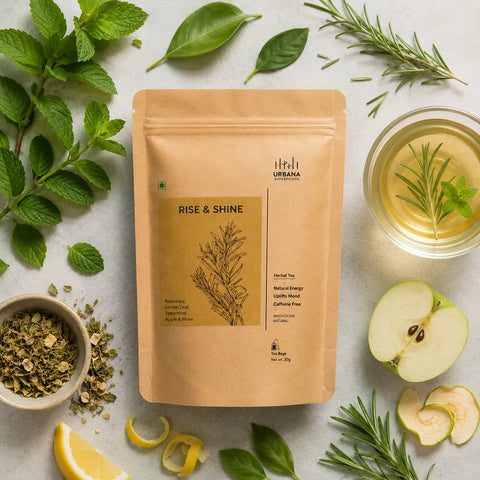
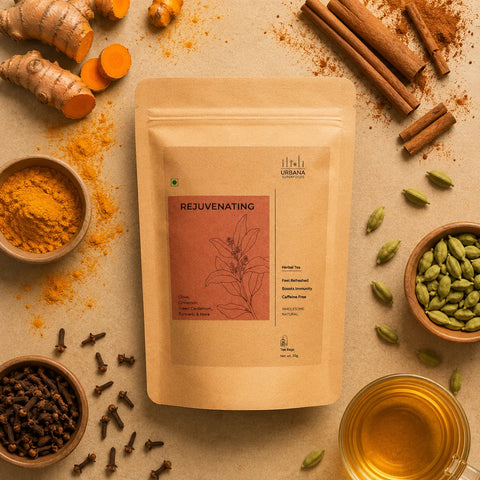
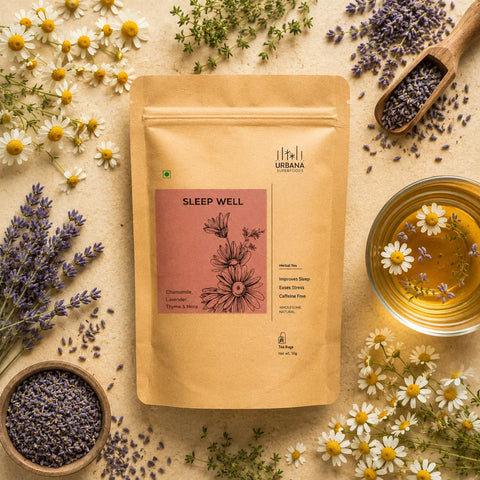
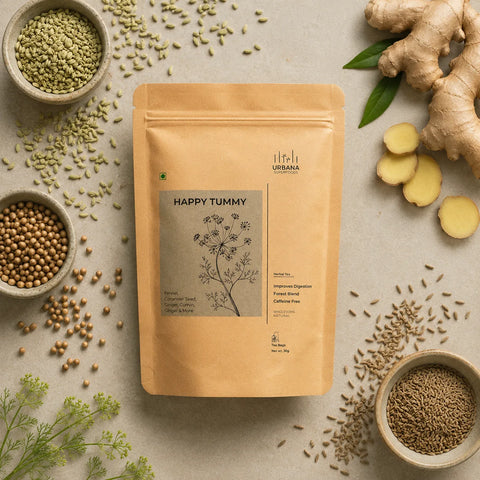
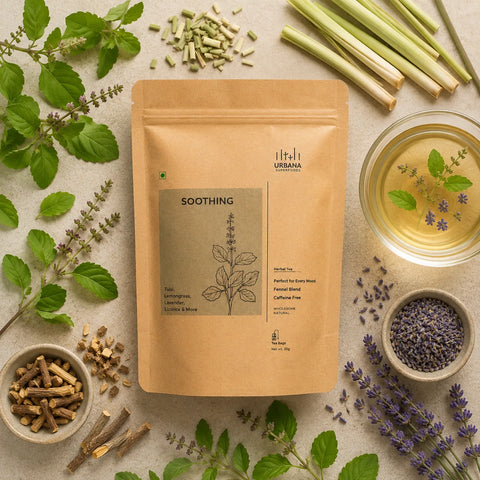


Table of Contents
It is 9:04 am, and the first round of tea has already arrived. By 1 p.m., you will eat whatever is closest. By 4 p.m., you will need another cup just to function. By 9 p.m., you will get home, collapse, and order food from your phone because thinking about cooking is genuinely impossible.
If you work a 12-hour desk shift in India, in a tech park, a finance floor, a consultancy, a BPO,this is not laziness. This is the logical result of a work structure that leaves almost no room for health decisions. And yet, the long-term cost is real: increasing rates of metabolic syndrome, type 2 diabetes, cardiovascular disease, and chronic fatigue are all being tracked in Indian urban working populations at younger and younger ages.
This guide will not ask you to wake up at 5 am or follow a calorie-counted meal plan. It will give you a realistic, science-grounded framework for what to eat, when to move, and what to drink across a 12-hour workday,in the food culture you already live in.
What a 12-hour desk shift is actually doing to your body
The health damage from a 9-to-9 routine is not one dramatic event. It is a slow accumulation of small physiological disruptions that compound across months and years. Understanding what is actually happening makes the solutions easier to choose.

Prolonged sitting reduces metabolic function independently of exercise
Research published in Diabetologia followed over 794,000 people and found that prolonged sitting is independently associated with increased risk of type 2 diabetes, cardiovascular disease, and all-cause mortality, even in people who exercised regularly outside of work. The mechanism: when large muscle groups in the legs and core are inactive for extended periods, the body's capacity to regulate blood sugar and clear fats from the bloodstream drops significantly. This is not about fitness level. It is about the physiology of stillness.
Repeated refined-carb snacking creates a blood sugar rollercoaster
The typical Indian desk snacker eats biscuits, namkeen, white bread sandwiches, and sugary chai throughout the day. Each of these produces a rapid spike in blood glucose followed by a crash. The crash triggers hunger and cravings, which lead to more snacking. Over months, this cycle contributes to insulin resistance, abdominal fat accumulation, persistent brain fog, and the kind of fatigue that no amount of sleep seems to fix.
Excess caffeine raises cortisol and compounds stress eating
Five cups of chai a day is not unusual in an Indian office. Each cup triggers a cortisol release. Chronically elevated cortisol, from both workplace stress and excess caffeine,is directly linked to visceral fat accumulation, disrupted sleep, lowered immunity, and increased appetite for high-calorie foods. This is why people who are stressed at work tend to eat more, not less. It is a hormonal response, not a willpower failure.
Late-night eating disrupts how your body processes food
If you are eating dinner at 9:30 p.m., after a 9-to-9 shift, your metabolic clock is already winding down. A systematic review in Obesity Reviews found that eating late at night disrupts circadian clock genes in metabolic tissues, reducing insulin sensitivity and increasing the efficiency with which the body stores calories as fat
A landmark study in the The Guardian found that replacing just 30 minutes of daily sitting with any light physical activity was associated with a 35% lower risk of all-cause mortality. You do not need to go to the gym. You need to not sit still for 12 hours.
What to eat across a 9-to-9 shift, a practical, Indian-context meal plan
The most common gap in advice for desk workers is specificity. General guidance to "eat more protein" or "avoid refined carbs" is not actionable at 1:15 pm on a Wednesday when you are exhausted, and the canteen has a limited menu. What follows is a realistic meal timing framework built around a 9 am–9 pm shift.
|
Time |
What to eat |
Indian options |
Why it matters |
|
7:30 – 8:30am |
Breakfast,before leaving home |
2 eggs + 1 roti with a small amount of ghee; Urbana's Superlicious Muesli soaked overnight with milk or curd; moong dal chilla with chutney; poha with peanuts and vegetables |
Skipping breakfast is associated with a 27% higher risk of heart attack and greater all-day hunger. Protein at breakfast suppresses ghrelin (the hunger hormone) for 3–4 hours. |
|
9:00 – 9:30am |
Morning drink |
500ml of water before your first chai. If replacing a chai, a caffeine-free herbal tea with spearmint, rosemary, or lemon leaf works well at this time of day ,these botanicals are associated with mild alertness without the cortisol spike of caffeine. |
Hydrating before caffeine reduces the intensity of the cortisol spike. Even one glass of water at this point meaningfully improves the first 2 hours of focus. |
|
12:30 – 1:30pm |
Lunch |
2 rotis + dal + sabzi + small portion of rice + kachumber salad; rajma-chawal with raita; chicken or paneer with vegetables and brown rice or jowar roti |
Aim for half your plate as vegetables, one quarter protein, and one quarter complex carbohydrate. This ratio moderates the blood sugar response and reduces the severity of the post-lunch slump. Avoid maida-heavy options (white bread, pav, noodles) at this meal if possible. |
|
4:00 – 4:30pm |
Desk snack |
A handful of mixed nuts (10–15 pieces); date-and-nut energy balls made with cashews, almonds, and coconut and no added sugar; a piece of whole fruit; a hard-boiled egg; roasted makhana with a pinch of rock salt |
This is when blood sugar drops and most people reflexively reach for biscuits or a third chai. A protein-and-fat snack at 4pm stabilises energy through the final 4–5 hours of the shift ,a meaningful difference in both focus and evening food choices. |
|
4:30pm |
Afternoon tea |
If replacing a second chai: a ginger, fennel, and coriander seed blend. Fennel is clinically associated with reduced digestive discomfort and bloating.Ginger accelerates gastric emptying, helping move a heavy lunch through faster and reducing the 2pm–4pm stupor. |
The afternoon window is where most people accumulate chai cups 3 and 4. Replacing one with a caffeine-free herbal option while keeping the warm-cup ritual intact is a manageable and impactful change. |
|
7:00 – 8:00pm |
Dinner |
Dal + 2 rotis cooked in cold-pressed oil + one vegetable sabzi + small salad; khichdi with ghee; grilled fish or chicken + sweet potato + steamed vegetables; rajma or chole with brown rice and raita |
Eating before 8pm protects circadian metabolism. Keep this meal moderate ,not a compensatory feast after a day of under-eating. Adding 1 teaspoon of ghee to your roti slows the glycaemic response of the whole meal. Eating late because work ran long is fine occasionally ,the goal is consistency across the week, not perfection on every day. |
|
9:30 – 10:00pm |
Wind-down drink |
A chamomile-based herbal tea (chamomile, nettle, spearmint, thyme) or warm turmeric milk with a pinch of black pepper and a small amount of ghee |
Chamomile contains the flavonoid apigenin, which binds to GABA receptors in the brain and supports sleep onset. For a 9-to-9 worker with a compressed sleep window, any measurable improvement in sleep quality has outsized downstream benefits on energy, appetite regulation, and stress resilience the next day. |
Batch prep shortcut: Set aside 40 minutes on Sunday. Boil a batch of eggs, cook one dry sabzi that stores well (aloo gobi, mixed vegetable, dry rajma), soak and pressure-cook a dal, and portion out your nuts and snacks into small containers. This removes five days of 1pm decision-making from your plate entirely.
Explore - Top 10 Best Ghee Brands in India
Replace your biscuit-chai snack: what actually works at a desk

The single biggest dietary issue for Indian desk workers is not one bad meal ,it is the slow, cumulative intake of refined snacks eaten out of habit rather than hunger. Biscuits, namkeen, white bread toasts, glucose biscuits with chai. None of them are satisfying in any durable sense. They spike blood sugar, crash it, and leave you reaching for the next one 30–45 minutes later.
The swap does not need to be a dramatic lifestyle change. It needs to meet the same functional requirements: portable, desk-friendly, no prep, tastes like something you actually want.
-
Instead of Marie or Parle-G biscuits: a small handful of mixed nuts ,almonds, walnuts, cashews, or a combination. Slower to digest, higher in protein and healthy fat, no blood sugar crash.
-
Instead of chips or namkeen: roasted makhana with a pinch of rock salt and black pepper, or energy balls made with dates, cashews, almonds, and coconut and no added sugar ,the kind of thing you can keep in your desk drawer and reach for without thinking. Urbana's Truepops (dates, cashews, almonds, coconut, natural fruit ,no added sugar, vegan, gluten-free) fit this category well.
-
Instead of a samosa or vada pav: a hard-boiled egg or a small portion of paneer with black pepper. Both are high protein, keep you full for 2–3 hours, and require zero prep if you batch-boil eggs on Sunday.
-
Instead of a sugary energy drink or packaged juice: warm water with lemon, plain chaas with cumin and black salt, or coconut water. All three hydrate better and cause no blood sugar disruption.
-
Instead of a sweet chai at 4pm: a herbal infusion with ginger, fennel, cardamom, or tulsi. These are not chai replacements in flavour, but they occupy the same ritual slot ,warm, aromatic, a reason to pause. Urbana's herbal teas (spearmint and rosemary for the morning, ginger and fennel mid-afternoon, chamomile and tulsi for the evening) are made from whole Himalayan botanicals, FSSAI certified, and caffeine-free.
What you cook with matters: oils, ghee, and the Indian pantry

A persistent myth in urban Indian wellness culture is that ghee is fattening and all oil should be minimised. The science is considerably more nuanced ,and, in the case of traditional Indian cooking fats used in appropriate quantities, more reassuring.
The problem is refined oils, not fat itself
According to a research paper, most refined vegetable oils available in Indian supermarkets ,refined sunflower, palmolein blends, and refined groundnut ,are processed at high temperatures that degrade unstable polyunsaturated fatty acids into trans fat compounds. These refined oils provide almost no nutritional value and contribute directly to the inflammation and metabolic disruption already being worsened by sedentary desk work. They are not neutral. They are actively counterproductive.
Cold-pressed oils preserve what refined oils destroy
Cold pressing extracts oil at low temperatures without chemical solvents, retaining natural antioxidants, vitamin E, polyphenols, and omega fatty acids. Cold-pressed mustard oil is well-suited to Indian tadkas and sabzis. Cold-pressed coconut oil works for South Indian cooking. Cold-pressed groundnut oil is a good general-purpose option. The same recipes, meaningfully better nutrition. Urbana sources single-ingredient cold-pressed oils directly from Indian farms, no chemical processing no additives.
Ghee is not the enemy
A2 bilona ghee , made from the milk of indigenous desi cow breeds using the traditional hand-churned bilona method, contains butyrate, a short-chain fatty acid that supports the gut lining and reduces intestinal inflammation. It also contains conjugated linoleic acid (CLA), which research associates with reduced body fat accumulation. At 1–2 teaspoons per day ,on a roti, stirred into dal, added to khichdi,A2 ghee slows the glycaemic response of carbohydrate-containing meals, supports fat-soluble vitamin absorption, and is not associated with weight gain at these quantities. Urbana's A2 bilona desi ghee is made in small batches from indigenous cow breeds and is free from additives and stabilisers. The fat that causes the most harm in a typical Indian desk worker's diet is not buffalo gheeon a roti. It is the partially hydrogenated fats in packaged biscuits, the refined palmolein in canteen-fried food, and the trans fats in mass-produced snacks eaten unconsciously throughout the day.
How to move when you cannot leave your desk
The research on interrupting sitting is unambiguous. A meta-analysis in the PMC found that replacing just 30 minutes of daily sitting with light physical activity ,not vigorous exercise, just movement ,reduced all-cause mortality risk by 35%.
The mechanism here is important: it is not about burning calories. Brief bouts of movement restore insulin-stimulated glucose uptake in muscles that have been suppressed by sitting, reduce inflammatory markers, and improve blood flow to the brain, which is why a 2-minute walk around the floor after sitting for an hour often makes you think more clearly, not just feel better physically.
Set a timer for every 45 minutes When it rings, do any of the following for 2 minutes:
- Calf raises: Stand at your desk. Raise both heels slowly until you are on your tiptoes. Lower. 15–20 reps. Improves lower-leg circulation and reduces ankle swelling from long periods of sitting.
- Chair squats: Stand in front of your chair, feet shoulder-width apart. Lower slowly until you almost touch the seat, then stand. 10 reps. The most effective lower-body activation requires no floor space.
- Seated spinal twist: Sit upright. Place your right hand on the outside of your left knee and gently twist left. Hold 20 seconds. Switch sides. Releases lumbar compression from sustained sitting posture.
- Shoulder blade squeezes: Sit upright with arms at your sides. Squeeze your shoulder blades together and hold for 5 seconds. Release. 10 reps. Counteracts the forward-head and rounded-shoulder posture that develops from screen work.
- Desk push-ups: Place hands on the edge of your desk, shoulder-width apart. Step feet back and lower your chest toward the desk. Push back up. 10–12 reps. Upper body and core activation without needing any floor space.
- 10-minute post-lunch walk: A short walk after eating reduces the post-meal blood sugar spike by up to 22%, according to a randomised controlled trial. Walk the building floor, the parking lot, down one staircase and back. It does not need to be fast.
What to drink instead of chais
Chai is not the problem. The ritual of a warm drink, taken at intervals across a long day, is genuinely useful for focus and social connection in an Indian office. The problem is the quantity, the sugar, and the assumption that caffeine is the only way to get that effect.
A practical framework: one chai in the morning (before 10am) and one in the afternoon (before 3pm). Replace everything else with one of the following:
-
Warm water with lemon: One of the most consistently effective simple hydration habits. Provides vitamin C, mild alkalinity, and the act of intentionally drinking something warm. One glass every two hours does more for sustained energy and skin clarity than most supplements.
-
If coffee rather than chai is your primary caffeine source, the same 3–4 cup ceiling applies. Choosing a clean, single-origin coffee, like Urbana's medium-roast Arabica from Coorg, over instant or vending-machine coffee avoids the added sugar, whitener, and often stale, over-roasted beans that spike the crash-and-craving cycle described earlier.
-
Ginger and fennel tea (mid-afternoon): Ginger accelerates gastric emptying, reducing the bloated, heavy feeling after a work lunch. Fennel reduces intestinal spasms and gas. Together, these directly address the 2–4pm slump that most desk workers experience after eating. Urbana's Happy Tummy herbal tea (ginger, fennel, coriander seed) is built around this pairing.
-
Tulsi and lemongrass tea (stress peaks): Tulsi is one of the most studied adaptogens in Ayurvedic and modern clinical literature. A double-blind trial found daily tulsi supplementation significantly reduced generalised anxiety and stress markers compared to placebo. When stress eating is driven by anxiety rather than real hunger ,which it often is ,a tulsi and lemongrass tea occupies the same moment without the caloric cost. Urbana's Soothing herbal tea (tulsi, lemongrass, chamomile) serves this purpose.
-
Chamomile tea (evening, after work): Chamomile contains apigenin, a flavonoid that binds to GABA-A receptors in the brain, reducing anxiety and promoting sleep onset.For someone finishing work at 9pm with a narrow sleep window, this is the one drink change with the most direct impact on the next day's functioning. Urbana's Sleep Well herbal tea (chamomile, nettle, spearmint, thyme) is made from whole Himalayan botanicals and is free of caffeine, additives, and artificial flavours.
-
Plain chaas (buttermilk with cumin and rock salt): An underrated desk drink. Hydrating, probiotic, digestive, and deeply Indian. The one-minute effort to make it in the morning pays back across the whole afternoon.
- On particularly hot or high-output days, a sugar-free electrolyte mix stirred into water does what plain water can't ,replacing sodium lost to AC-dried office air and a long commute.
One superfood that fits into your existing meals without changing anything
The word superfood has been heavily marketed to the point of meaninglessness. But kale genuinely deserves the label, and in powder form, it solves the biggest obstacle for desk workers: it requires no new recipes, no new cooking, and no additional time.
Kale is one of the most nutrient-dense vegetables on Earth ,exceptionally concentrated in vitamins A, C, and K, calcium, iron, folate, and a broad range of flavonoids and carotenoids. Fresh kale is difficult to source reliably in most Indian cities and spoils quickly. Dried kale powder is shelf-stable, dissolves into existing dishes, and retains the core nutritional profile well when the drying is done at low temperatures.
One teaspoon (3–5g) of organic kale powder stirred into your morning dal, curd, smoothie, or roti dough adds meaningful nutritional density without changing what you cook or how long it takes. The colour changes slightly. The taste change is negligible in any savoury preparation. Urbana's organic kale powder is grown in the Himalayan foothills without pesticides, dried at low temperatures to preserve nutrients, and lab-tested for purity.
Weekend habits that actually protect your weekday health
Five difficult days cannot be fully undone in two days. But they can be made meaningfully less damaging by a few consistent weekend choices.

40 minutes of meal prep on Sunday
You do not need to cook the full week. You need to reduce the number of decisions your exhausted Tuesday-afternoon brain has to make. Boil a batch of eggs. Cook one dry sabzi that stores well (aloo gobi, mixed vegetables, lobia). Pressure-cook a dal. Portion out snacks into small containers. These 40 minutes protect five days of lunch and snack decisions from being made in a state of hunger and fatigue ,which is when the worst choices happen.
Sleep recovery
If you are sleeping 5–6 hours on weekdays, weekend sleep extension meaningfully restores metabolic function. Research in Current Biology showed that two nights of extended recovery sleep partially reversed insulin resistance caused by chronic short sleep during the week, though the effect diminished if the pattern was sustained long-term.This is not a licence to completely disrupt your sleep schedule, but it is evidence that your body is more resilient than the wellness industry's messaging suggests.If you want something sweet with your wind-down tea, a square of sugar-free dark chocolate satisfies the craving without the blood-sugar spike that would work against the sleep benefits of the chamomile.
One movement session per day
Saturday and Sunday are your window for sustained exercise. A 30-minute brisk walk, a bodyweight circuit (push-ups, squats, lunges, planks), or a YouTube yoga session provides the cardiorespiratory and musculoskeletal stimulus that five sedentary workdays cannot. Two sessions per week of moderate-intensity activity is the minimum associated with meaningful cardiovascular benefit in sedentary adults.
The bottom line
Working 9 to 9 is not a healthy sentence. It is a constraint with real workarounds. The desk workers who stay metabolically healthy over long careers are not the ones who found extra time for the gym. They are the ones who made small, consistent choices about what they ate, when they moved, and what they drank across hundreds of ordinary workdays.
Fix your 4pm snack. Replace one chai. Walk for 10 minutes after lunch. Add a teaspoon of kale powder to tonight's dal. Cook with cold-pressed oil this week. Each of these is a one-time decision that becomes a habit. None of them require a weekend retreat or a clean-eating overhaul.
Your health across a 12-hour workday is not a separate project from your life. It is your life.
Disclosure: Some products mentioned in this guide are from Urbana Superfoods, while a few are independent third-party product examples included only to support the routine explained in this article. These mentions are for reader convenience and should not be treated as paid endorsements or medical recommendations. We do not earn any commission from third-party product links. Please verify product details, pricing, ingredients, and suitability before purchasing.